To say that I (like many Americans, and humans worldwide) have run the proverbial gamut of emotions over the last 24 hours or so is putting it mildly. The obvious reason: the successful launch of the Artemis II mission that will send four humans around the moon. No need to go into details here, or why the mission is so historic…instead I want to quickly touch on the bad the stressful, and the good, as I have experienced them, since around 6:35 EDT, 1st April, 2026.
THE BAD
I hate starting here but want to get it out of the way. (Gotta eat your boiled peas before you get to dessert.) We could talk about how the whole space program has teetered on the edge of the DOGE knife, and the way all of this could have been simply left to private concerns, but we’ll just be thankful that we haven’t quite reached The Expanse level of privatization (yet.) No, the main negatives really have nothing to do with the mission itself, but rather the general ignorance of an uneducated populace, an ignorance stoked and allowed to thrive in the petri dish of social media. Carl Sagan warned about this, including the present situation wherein “awesome technological powers are in the hands of a very few, and no one representing the public interest can even grasp the issues.” One of the dangers, basically, is that nobody pays attention in science class anymore, and yet we all rely on science and technology, increasingly, in our daily lives. For example, do you know how your wireless charger works, the one for your phone? (Hint: it has to do with magnets, which are not miracles or even magical.) Of course, there really isn’t a need for you to understand this process…not really. Not if everything continues to work, right? And with the pace of today’s world, memorizing PIN numbers, clicking on Captchas to prove your humanity, remembering to pick up that prescription, navigating car line, and so on…who the hell really cares how a wireless charger works? Who has the time to even consider it at length? This is an understandable issue: the information saturation point. We prioritize what we give a shit about, frankly, and that’s okay. However, when you see Reels and TikToks wherein people try and pick apart the Apollo program…you can grasp how easily the thread can be pulled…and how quickly the sweater can unravel. When people ask, in all seriousness, “Who still believes the moon landing was real?” It makes the hair on the nape of my neck stand up. It shouldn’t, really. I should just roll my eyes like any other geek and correct whoever posted or shared the initial question “Ahem…there have been six successful moon landings to date.” But the problem is that every one of the conspiracy arguments is not only easily wiped out (for example, the Nixon phone call. “On a LANDLINE? YEAH, RIGHT” the idiots say, not realizing that landline communications can easily be translated into radio signals or other formats…trust me, I worked in radio for 20 years, this is how we did the majority of our remote broadcasts) but it demonstrates a severe lack of critical thinking…and worse, a perverse desire to NOT believe in science. But learning, understanding, and retaining that scientific information requires effort. It’s much easier to wallow in ignorance and spew half-baked theories. Ironically, most of these are shared via a digital network and on devices which would simply not exist if humanity hadn’t reached for the stars in the first place. I try to ignore these trolls and idiots, but the fact that they are out there diluting the public space with such bullshit just irks me to no end. (Here endeth the Old Man Yelling at Cloud portion of the blog.)
THE STRESSFUL
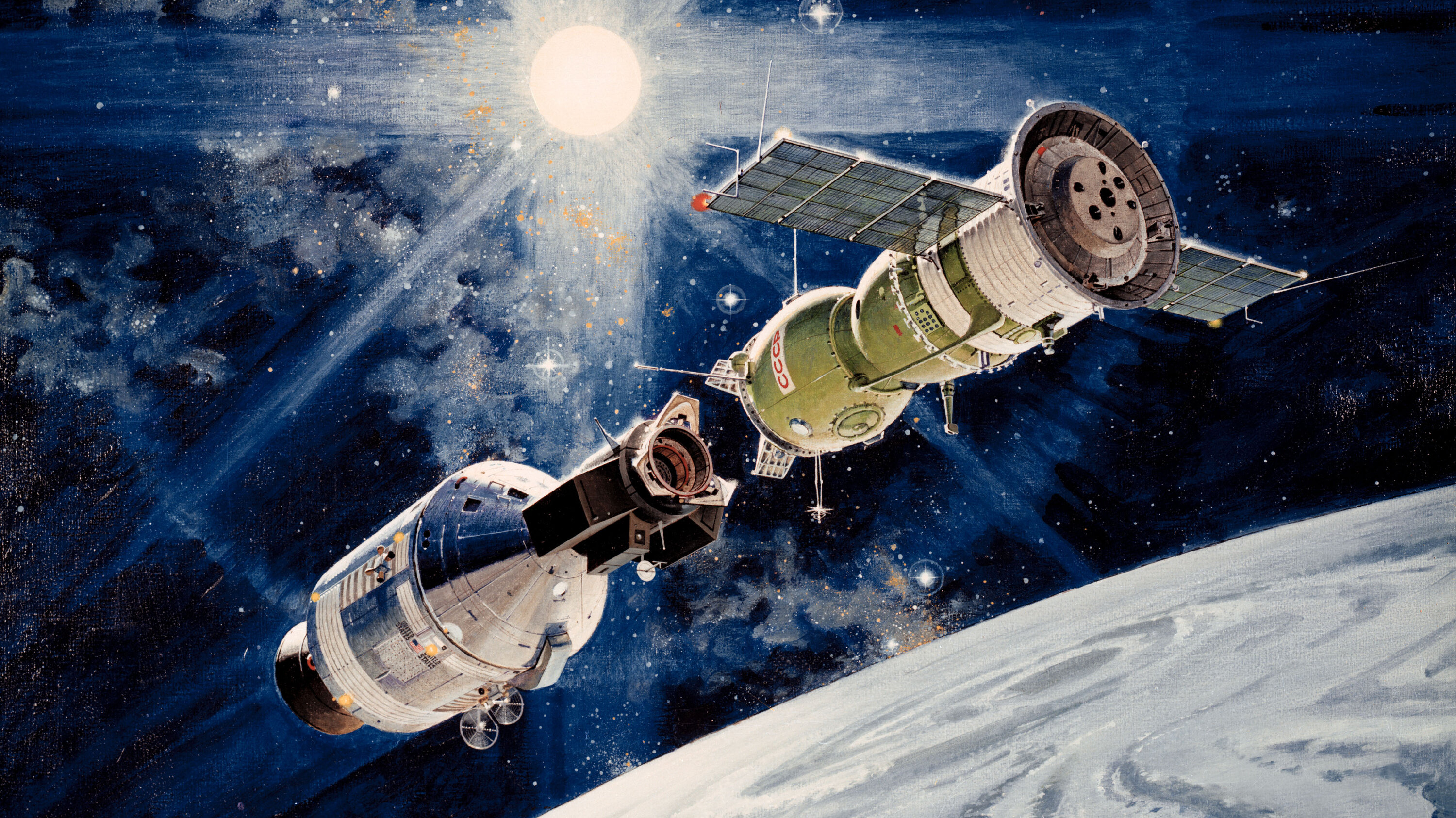
I was born in 1970, in a time when mankind had already set foot on the moon (twice!) I was too young to remember Apollo 17, the last time man walked on Luna, but I have memories of the Apollo-Soyuz mission, and my mom describing the docking sequence by interlocking her fingers with mine.
As a space-crazy kid, I watched with excitement as the Space Shuttle program progressed, and went through 24 successful orbital operations (not even including the several “orbital test flights”) before our high school, along with most of the schools in the nation, prepared to watch Christa McAuliffe, the first teacher to travel to space, launch from Kennedy Space Center aboard Challenger as part of STS-51-L…
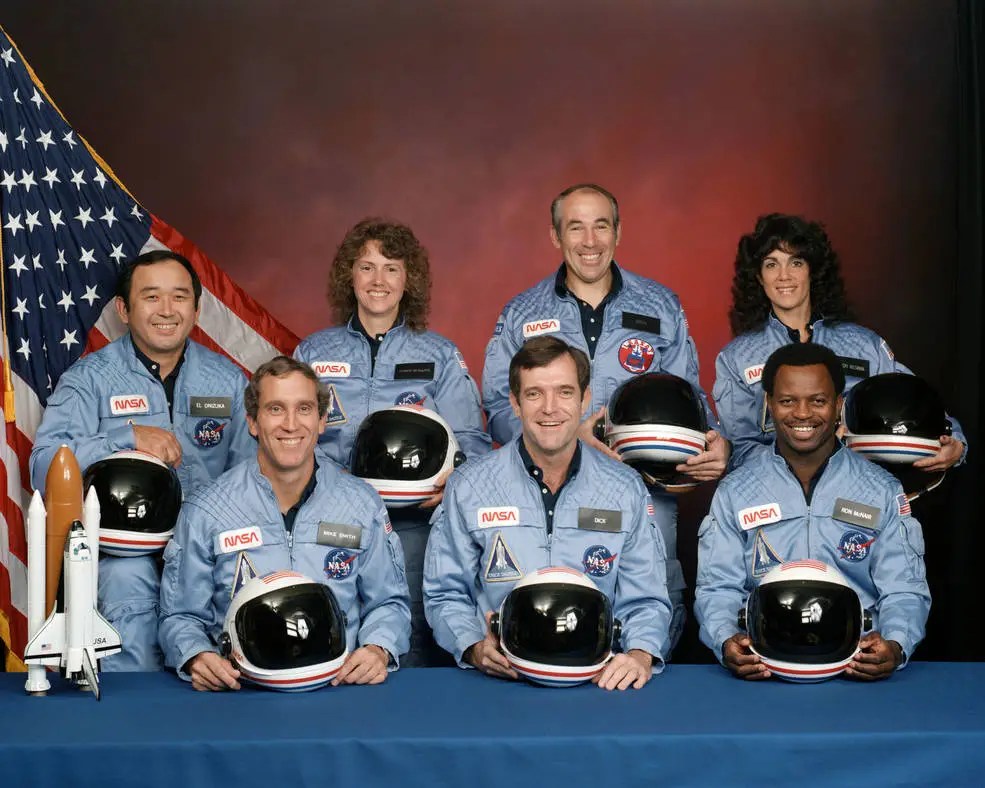
For Gen-Xer like me, no further description is necessary. The event is part of our collective generational memory, much like the Kennedy assassination was to our parents: a tragedy you could scarcely believe, and yet, there it was, on TVs that had been rolled into classrooms from coast to coast. Honestly, until the fall of the Berlin Wall and the terror attacks of 9/11, the Challenger disaster was the singular “where were you when” event of our young lives. So when I say that I, along with most or all of my Gen-X brothers and sisters, had a bit of undesired anxiety…a nagging, fingers-crossed sort of feeling which crept in as the launch countdown progressed…I just hope that younger readers will understand. (I know the boomers do…they’ve been through it, from Apollo 1 to Kennedy to the fall of Saigon…they’re old pros at being present for historic moments.) I mean, there were 87 successful missions (87!) after the Challenger disaster until the OG shuttle…Columbia…oldest in the fleet…broke up upon re-entry in 2003. There were 22 more after Columbia. Two critical failures out of 135 trips to and from space during the Space Shuttle program. With all that could potentially go wrong, space travel has still managed to become fairly routine. Hell, there have been 170 individual trips to the International Space Station as of this past January, to say nothing of the other nations keeping their own to-and-from schedule. Ther was no reason in the world to suspect that Artemis II would be anything but one more trip beyond Earth’s atmosphere. And yet…as I watched the stages separate and the camera shot of that beautiful arc of the Terran horizon, I breathed a sigh of relief. I know I’m not the only one.
THE GOOD
Now, with all the bellyaching I did about ignorance at the top of this article, I want you to know that I truly feel, in my heart of hearts, an overwhelming sense of hope. Every news organization, every social media account, both my immediate friends and accounts I follow, was exuberant and downright giddy as we watched and posted about the successful launch. It felt fresh, and new, and invigorating. Because maybe we have become jaded. Maybe we have taken this whole thing for granted, this search for knowledge, this desire to look up and wonder “what if?” and “what’s out there?” We’re so used to seeing a line of Starlink satellites go by without even considering how remarkable that is. Humans…us…people…we did that. Scientists somewhere wanted to figure out how…and they did it! Maybe that’s the thing I should be happy about, that despite the general ignorance of how certain technologies work and why they work the way they do…maybe the fact that nobody can look around and deny the existence of it, the very way science itself has permeated every fiber of our daily lives, maybe that’s key, somehow. Maybe successfully sending humans around our moon, and the upcoming missions to actually let them walk there, touch the chalky surface, maybe it makes people pay a little more attention to the mobile device in their hand. Maybe it makes them appreciate the ability to stream digital music through the air, to download a photo gallery of their baby nephew, to video chat in virtually real time with a loved one on the other side of the continent. And maybe it prompts the kids out there to ask “how does that work? How can we make it better? What can we come up with next?” There were 66 years between the Wright Brothers’ first powered flight at Kitty Hawk, NC and Neil Armstrong stepping onto the surface of the moon. What might the kids of Gen Z do in 66 years? What dreams might they pursue, what scientific mysteries might they solve? I know we have about nine more days before the Artemis II crew splashes down here on Earth, plenty of more time to stress about their safety…but also time to marvel at their deeds. Time to look up and wonder. It’s become trite to say it, but truly…what a time to be alive.



 Turner Watson
Leave a comment